






11 May Polarized Politics: Indiana Primaries and Their Impact
The Ripple Effect of Polarized Politics: From Indiana Primaries to Supreme Court Decisions
American politics is in a whirlpool of polarization. Events spanning from state primaries to Supreme Court decisions spotlight an ongoing struggle within the Republican Party over identity and influence. This tension carries broader implications for voting rights across the nation.
Indiana’s GOP Primaries: A Test of Loyalty
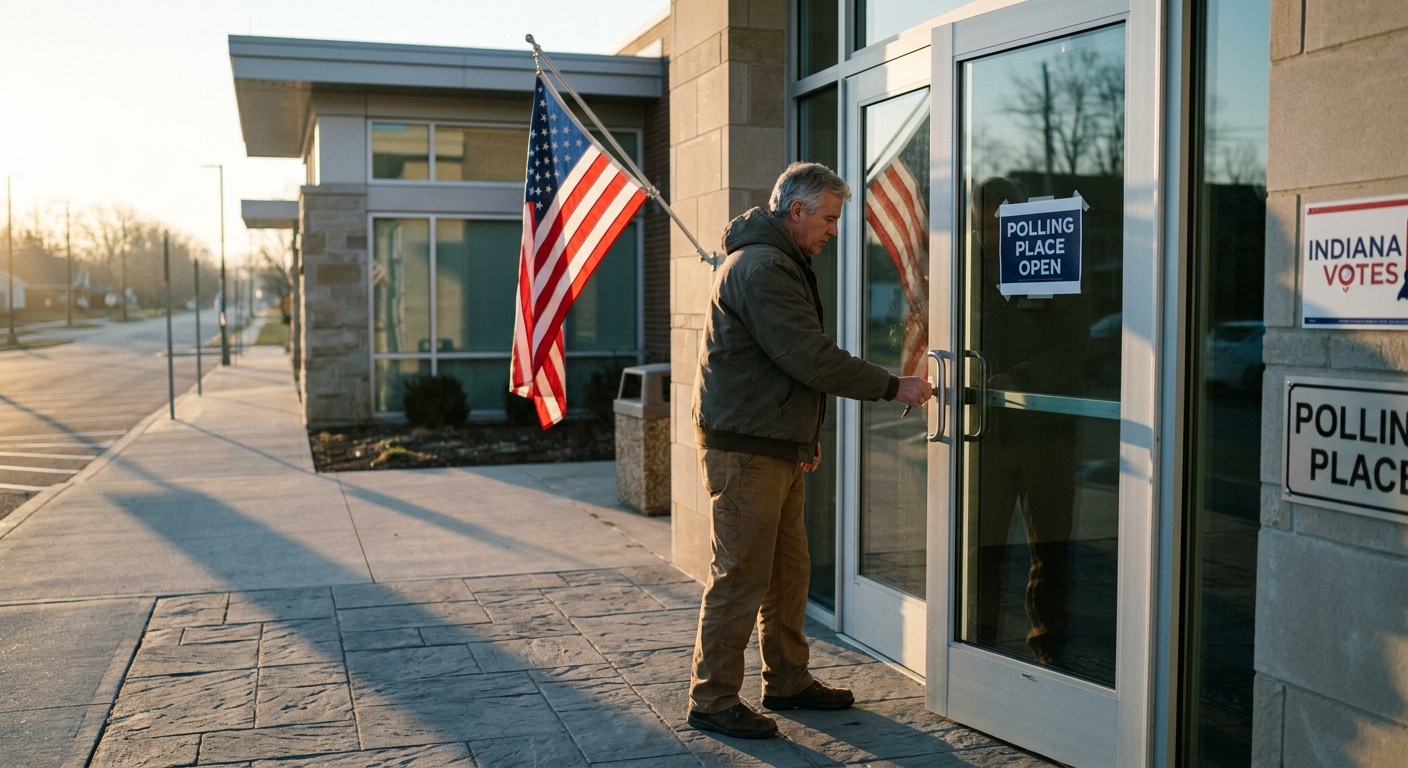
Indiana’s state Senate primaries became ground zero for battles defining the Republican Party’s future. Former President Donald Trump, with his undeniable clout, once again steered the outcome. Out of seven challengers he endorsed, five toppled incumbent Republicans who had stood against a White House-backed redistricting plan. A plan crafted to ensure more GOP seats in Congress—those incumbents, dismissed by Trump as “RINOs,” had dared to vote against it.
The results echoed beyond Indiana, sending a clear message to Republican lawmakers nationwide about the perils of opposing Trump. As U.S. Sen. Jim Banks (R-Ind.) starkly put it, “It’s Donald Trump’s Republican Party.” The primaries, seen as a referendum on “Trumpism,” ended with challengers winning by large margins, underlining the former president’s continuing hold over the party base.
Congress Faces a Packed Agenda and Intrigue Over Funding Allocations
While the GOP redefines itself, Congress returned to a daunting agenda, tackling crucial funding decisions for national security and the contentious allocation of resources. A proposed $1 billion for presidential ballroom security—yes, you read that right—has fueled confusion and irritation among lawmakers, with debates over its necessity and even Trump’s position on the matter swirling.
The debate lays bare the intricacies and political maneuvering behind budget decisions, especially as Republicans weigh using reconciliation to sidestep Democratic opposition in boosting funds for agencies like ICE and Border Patrol.
Supreme Court’s Ruling Intensifies Voting Rights Debate
The Supreme Court’s ruling in Louisiana v. Callais has only cranked up the tension, essentially weakening Section 2 of the 1965 Voting Rights Act. The decision gives Republican-led states the green light to eliminate majority-Black districts, claiming it’s about seeking partisan, not racial, redistricting advantages—a rationale critics say still sidelines minority voters.
This ideologically split decision is viewed by many as a move to bolster Republican power, possibly at the cost of minority representation. Backlash has been fierce, with concerns mounting over the steady erosion of voting rights, drawing comparisons to legislative action rather than impartial judicial decision-making.
The Symbolic Campaign of a Pencil in Oregon
In a twist nobody saw coming, J. Schuberth’s gubernatorial bid in Oregon as “Pencil” throws a spotlight on the absurdities and frustrations within political dialogue. Although Pencil’s political venture isn’t legally viable, it seeks to highlight Oregon’s educational challenges, especially its dismal national ranking in fourth-grade reading.
Schuberth’s unconventional campaign acts as a protest against what’s seen as leadership’s failure to tackle educational shortcomings, using satire to engage voters and push for significant reform.
Conclusion
From Indiana’s primaries to the Supreme Court’s rulings and Oregon’s quirky gubernatorial run, these political developments paint a picture of the ongoing challenges in navigating today’s highly polarized political landscape. As parties wrestle with internal strife and external pressures, the effects on governance, representation, and public policy are both profound and far-reaching.
No Comments