






12 May Redistricting Battles and Political Divides
Redistricting Battles Reflect Deepening Political and Racial Divides
The complex dance of representation and political clout takes center stage in America, with redistricting sparking fiery debates across the nation. States are locked in the contentious task of redrawing political maps, and the stakes are sky-high. It’s not just party politics; it’s a deeper issue tied to racial equity and representation.
The Louisiana Conundrum
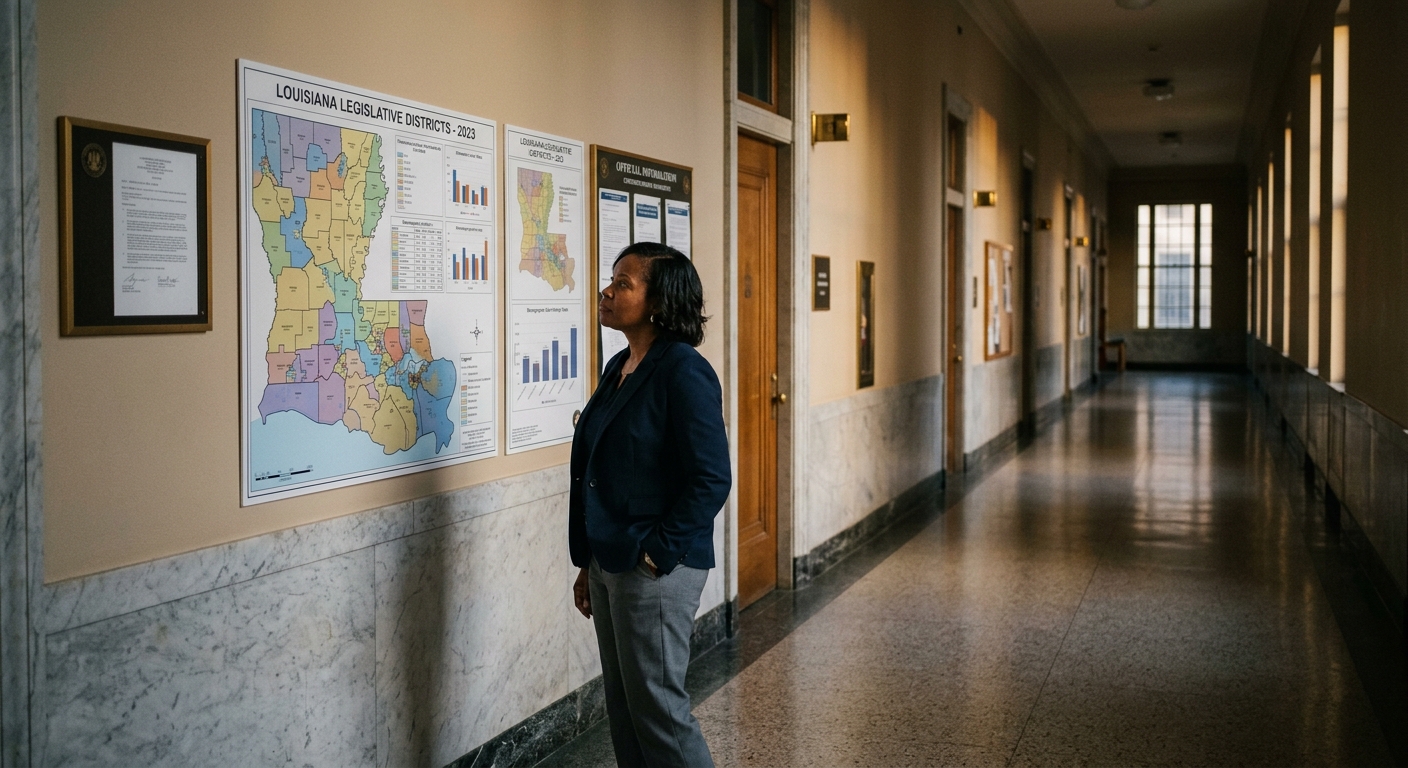
Take Louisiana, for instance—right in the eye of the storm. The U.S. Supreme Court’s recent moves have chipped away at the Voting Rights Act, forcing states like Louisiana to rethink their congressional maps. A court ruling recently axed a map that would have added a second majority-minority district. This decision reverberates through the state’s minority voting power.
In Louisiana, this redistricting drama has sparked a fierce debate, with protests echoing through the capitol halls. Lawmakers are caught in a bind: redraw the lines in a way that balances racial representation and political agendas. The stakes? Huge. The new map could threaten seats held by Black Democrats, potentially tilting the power balance toward the Republican majority.
A National Trend
But it’s not just Louisiana feeling the heat. Across the South—think Alabama, Mississippi, South Carolina, Tennessee—states are diving into mid-decade redistricting. It’s a broader trend, a strategic play to consolidate power, raising eyebrows about democratic fairness.
Missouri’s Supreme Court gave a nod to a map backed by former President Trump, showing the tactical game of redistricting. Such plans aim to boost GOP numbers in Congress, highlighting redistricting’s role as a political weapon.
The Broader Implications
These redistricting efforts go beyond political chess games. They hold deep consequences for racial representation in America. As states redraw lines, the balance of red versus blue—and indeed, black versus white—becomes crucial. Breaking majority-minority districts can shrink minority communities’ political voice, deepening racial divides.
The interplay of race and politics in redistricting reflects the ongoing hurdles in achieving fair representation in a diverse nation. With district lines in question, the dialogue on race and representation is front and center in the American democratic narrative.
“I think all states who have unconstitutional maps should look at that very carefully,” said Rep. Mike Johnson (R-LA), capturing the high stakes and tangled web of redistricting.
As midterm elections loom, these redistricting clashes will redraw the political and racial map of America for years to come. It’s not just about lines on a page; it’s about shaping power and representation in U.S. society.
No Comments