







13 May Rising Tuition and AI’s Impact on Graduates
Rising Tuition, Inflation, and AI: A Triple Threat to Higher Education
As graduation caps take flight this commencement season, students find themselves entering a job market with more unknowns than ever. Rising tuition, relentless inflation, and AI’s expanding role are converging to challenge the worth of a college degree, raising big questions about the future of higher education in the United States.
The Financial Strain of Higher Education
For many, the road to a college degree is paved with financial stress. Public colleges and universities grapple with funding cuts and shrinking enrollments, issues deepened by economic pressures heightened by recent inflation. The latest Consumer Price Index report paints a telling picture: inflation hit a three-year high in April, hiking up the costs of essentials like energy and food. This trend not only cuts into purchasing power but also amplifies the burden of student loans, making financial stability seem like a distant dream for many graduates.
Heather Long, Chief Economist at Navy Federal Credit Union, points out that inflation is wiping out wage gains, leaving many Americans in a financial bind. For new grads, this struggle is even more daunting with an average student loan debt hovering around $37,000, according to the Federal Reserve.
The AI Disruption in the Job Market
Meanwhile, the swift leap in AI technology is transforming job markets, fueling graduates’ anxieties about their employability. Students from Michigan State University and Eastern Michigan University report high anxiety about their career prospects—many rate their fears at an eight out of ten.
Despite high placement rates touted by university leaders like Michigan State’s President Kevin Guskiewicz, the nagging worry that AI might take over entry-level jobs lingers. And it’s not without reason. AI’s capabilities are stretching across various sectors, potentially upending traditional job roles and forcing a rethink of necessary skills and career paths.
Higher Education at a Crossroads
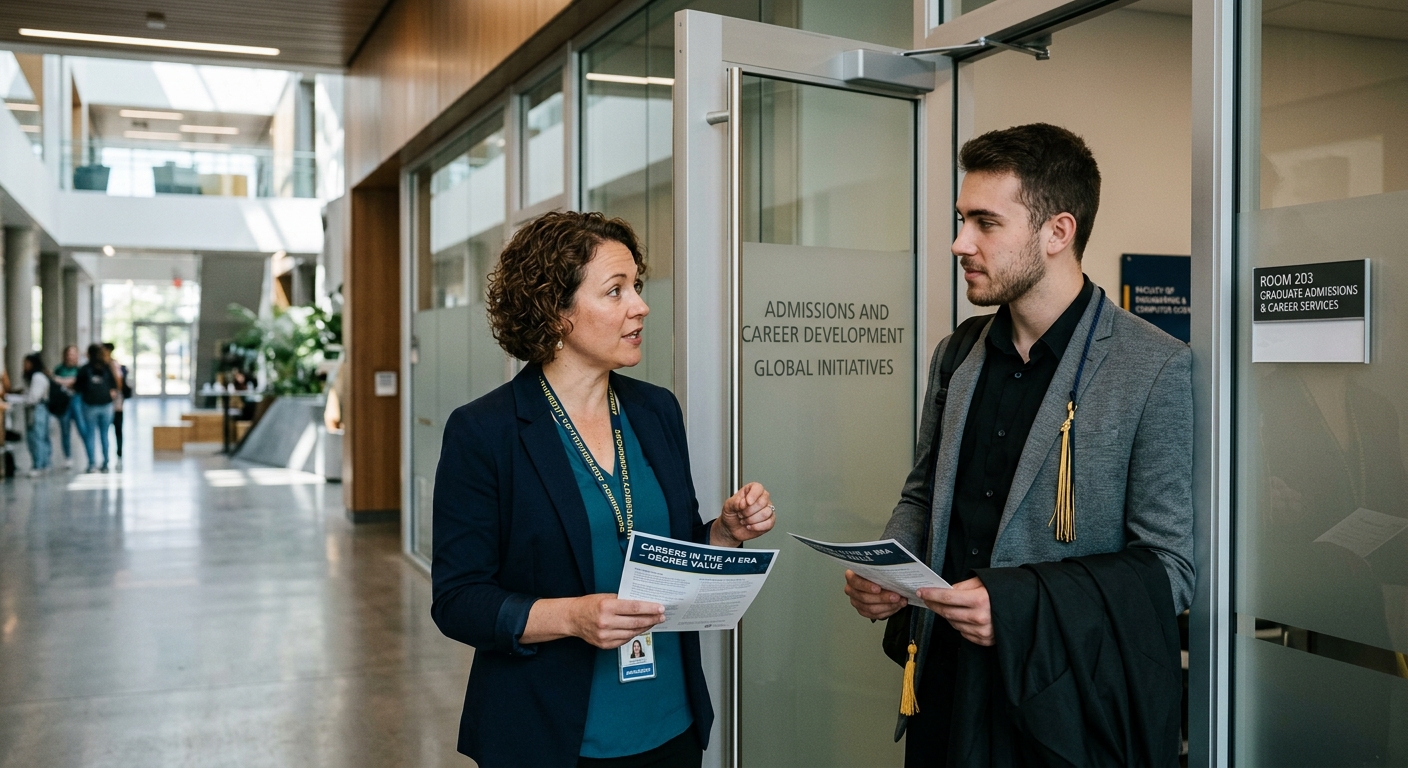
Today, higher education stands at a crucial juncture. Schools must pivot to meet these challenges by reshaping their educational offerings to better fit the changing job market. That means weaving AI literacy into curriculums, nurturing skills that resist automation, and boosting career services to help graduates find their footing.
On top of that, policymakers and educational leaders need to tackle the rising costs of education, seeking out fresh financial models to ease students’ economic strain. Combating inflationary pressures and securing stable funding for public institutions are vital to keeping higher education accessible and valuable.
Conclusion
The intersection of soaring tuition, persistent inflation, and AI’s reach presents a complex puzzle for higher education. As students and institutions work their way through this new world, the focus should be on building economic resilience and adaptability—ensuring that a college degree stays a solid stepping stone to success in an ever-changing landscape.
No Comments