






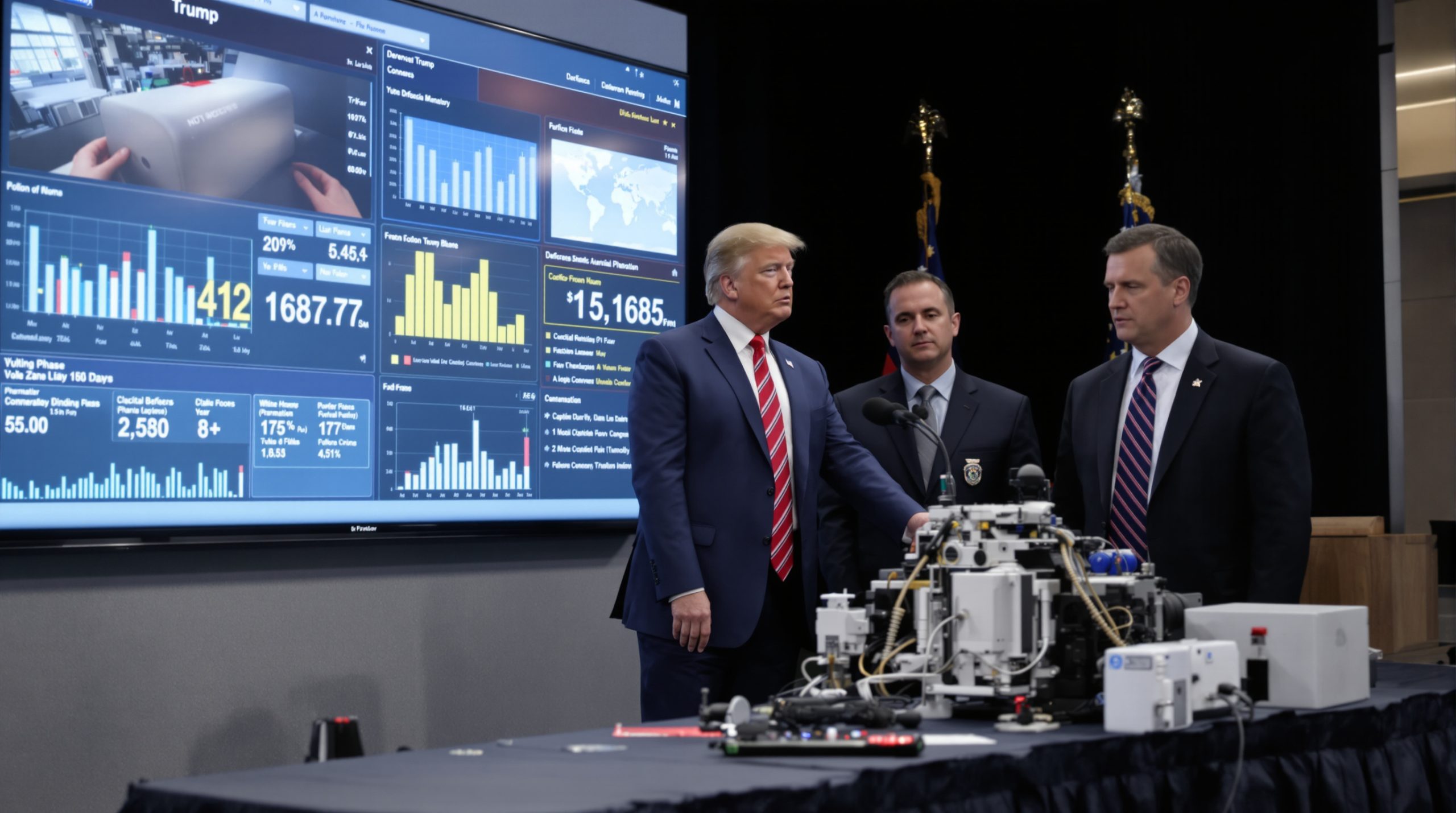
15 Jul Trump’s Defense Summit: Investments in Military Tech
President Trump’s Defense Summit Amidst Political Turbulence and Military Challenges
At the U.S. Army War College in Carlisle, Pennsylvania, President Donald Trump took center stage at a high-stakes defense summit, casting a spotlight on significant investments in battlefield technology. The event, orchestrated by Republican Sen. David McCormick, grabbed attention not just for its focus on military advancements but also for the political drama swirling around it—particularly as it dovetails with tense political maneuvers and military hurdles.
Investment in Defense Technology: A Strategic Focus
This summit pulled together top defense leaders and major global investors, including heavy hitters from JPMorgan, Blackstone, Lockheed Martin, and Boeing, to hash out national security priorities and potential investment opportunities. Notable among the announcements was ZeroEyes’ $10 million plunge into artificial intelligence and machine learning research, along with Gecko Robotics’ ambitious plans to open a new manufacturing facility aimed at weaving robotics into defense manufacturing processes.
These investments are timely, as the U.S. military grapples with replenishing its depleted stockpiles of advanced weaponry like Tomahawk cruise missiles and Patriot and THAAD interceptors, due to the war in Iran. An analysis released earlier this year suggested it might take at least three years to restore these vital military resources—emphasizing the urgency for technological advancements in defense.
Political Tensions and Confirmation Battles
Against a backdrop of fierce political dynamics, the defense summit unfolds amid ongoing confirmation battles for key slots in the Trump administration. Jay Clayton and Todd Blanche, nominated for Director of National Intelligence and Attorney General respectively, are facing tough scrutiny from Democratic senators. Clayton’s confirmation is crucial for reauthorizing important foreign spy powers. Meanwhile, Blanche’s nomination stirs controversy owing to his past involvement in politically charged legal settlements and the broader politicization of the Justice Department.
Democratic resistance to these nominations highlights the heightened partisan tensions in Washington, as the midterm elections loom with Republicans aiming to keep their grip on Congress. The political scene is further muddied by internal Republican rifts, evident in skepticism from Senators Thom Tillis and John Cornyn regarding Blanche’s controversial settlement with the IRS.
Implications for National Security and Governance
The convergence of defense technology discussions and political strife at the Carlisle summit illustrates the complex dance between military priorities and governance challenges. While the focus on technological investments signals a strategic pivot to boost national security, the political quarrels underscore the intricacies of implementing such advancements in a divided political arena.
As the Trump administration wades through these layered challenges, the outcomes of the defense summit and the ongoing confirmation hearings will likely bear significant implications for the U.S.’s defense capabilities and its domestic political climate. The intersection of these issues underscores the necessity of independent thought and a critical examination of the prevailing narratives shaping public perception and policy decisions—especially in this era of information overload.
No Comments