




24 Nov Newborn Hepatitis B Vaccination Rate Drops to 65.6%
Newborn Hepatitis B Vaccination Rate Drops to 65.6%
A 14-point drop in newborn hepatitis B shots is the number to watch
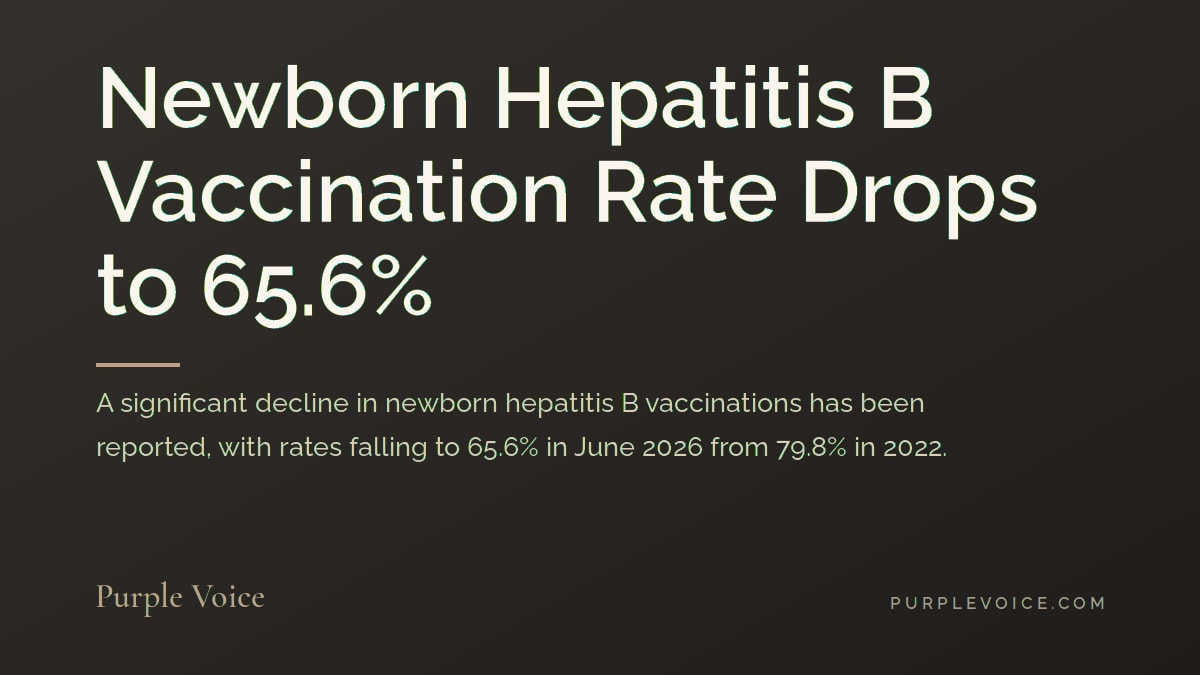
Fewer than two in three newborns now get the hepatitis B vaccine. A new peer-reviewed study in the New England Journal of Medicine found the rate fell to 65.6% in June 2026, down from 79.8% in 2022. For a shot that has been a routine part of a baby’s first days, that is a large move in a short window.
The study drew on health records for more than 1.3 million infants, according to Stateline’s report. Because the data comes from records rather than surveys, the figures describe what happened in hospitals and clinics, not what parents said they intended to do.
What the study shows and what it doesn’t
Hepatitis B is a liver infection. Vaccination is the main way to prevent it, and the vaccine is typically given soon after birth. A vaccine rate is a measure of how many babies received that first dose, so a drop means more infants are going without protection early in life.
Stateline gives the 2022 rate as 79.8%. The Hill covers the same decline, but the two outlets frame the cause differently. The Hill’s headline ties the decline to confusion led by Health and Human Services Secretary Robert F. Kennedy Jr., and its text says parents “continue to reject” the shot. The excerpts we reviewed from Stateline do not make that causal link, and they don’t explain why the rate fell.
That gap matters. The study measures the drop. It does not, based on the material available here, prove why parents chose differently. Anyone who tells you the reason is settled is ahead of the evidence.
How to read a vaccine number without getting lost in it
Headlines compress a lot into one figure. A 65.6% rate sounds like a single fact, but it’s an average across hospitals, states, and time periods. The useful question is which group the number covers and whether the same method was used in each year.
Here is what we’d check first when a vaccine number lands in your feed:
- Whether the figure comes from health records, insurance claims, or survey answers
- The exact year or month the rate describes
- Whether the article separates what the data shows from what the author thinks caused it
The number tells you that fewer babies got the shot. It does not, on its own, tell you why.
Why this matters beyond the clinic
Public health numbers rarely stay confined to one policy debate. They shape how officials respond, how local health departments plan, and how the public judges the people in charge. When two credible outlets describe the same 65.6% figure with different explanations, the framing becomes part of the story.
Purple Voice tracks that gap between data and narrative in politics, and vaccine policy is no exception. Watch whether future coverage separates the measured decline from the reasons offered for it, and whether officials point to specific data when they explain the trend. Our about page describes how we source the figures we publish.
Questions people ask
What is the hepatitis B vaccine rate for newborns?
According to the New England Journal of Medicine study reported by Stateline, 65.6% of newborns received the hepatitis B vaccine in June 2026. That is down from 79.8% in 2022.
Why did the hepatitis B vaccination rate drop?
The study measured the decline but the excerpts reviewed here do not establish a cause. The Hill’s headline links the drop to confusion led by Robert F. Kennedy Jr., which is the outlet’s interpretation.
How many infants were in the study?
The study examined health records for more than 1.3 million infants, according to Stateline. Records-based data reflects what providers documented rather than survey responses.
Want to see how politicians and media outlets frame health numbers in Washington? Start with the public record.
No Comments