



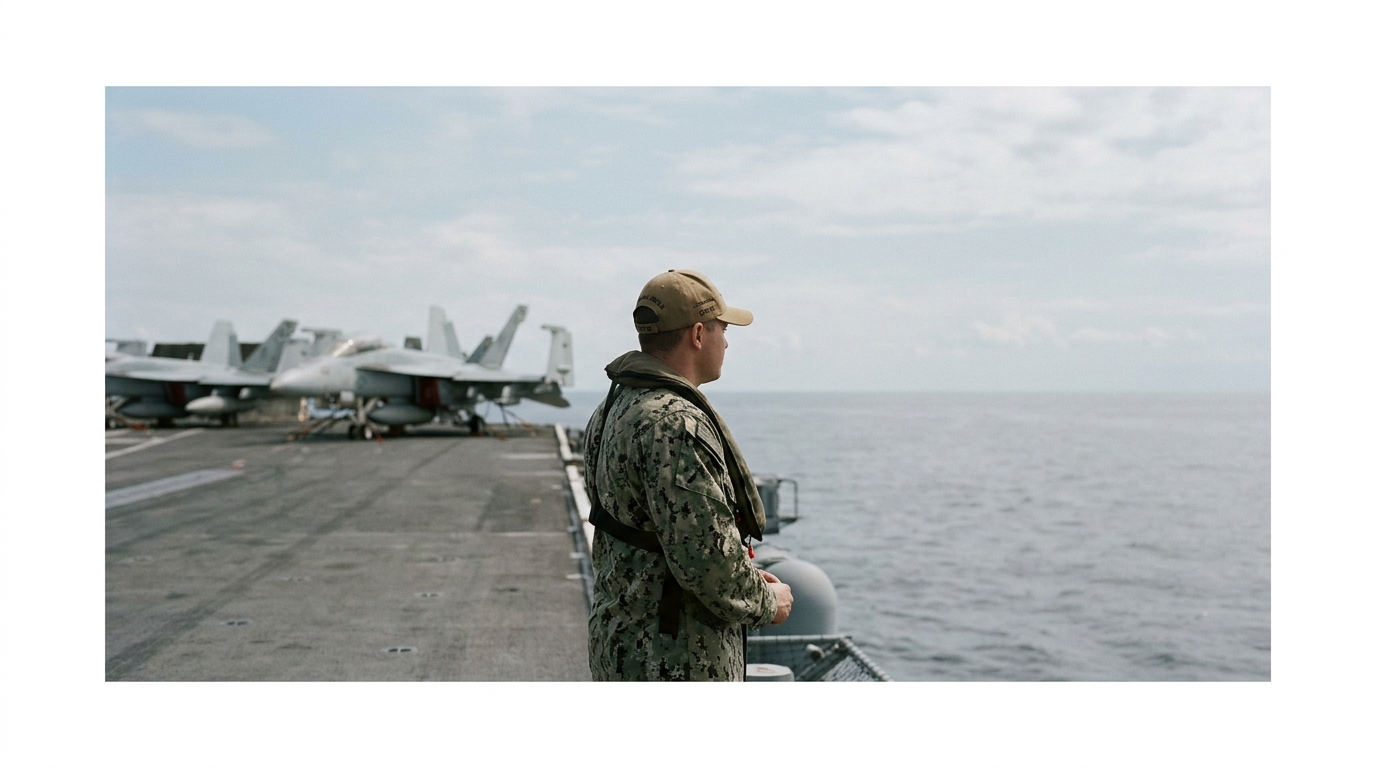
15 Aug USS Abraham Lincoln’s Long Deployment Raises Concerns
USS Abraham Lincoln: Strained Deployment Raises Strategic Concerns
The USS Abraham Lincoln, a symbol of American naval power, finds itself on an unusually long stint in the Middle East. It’s a reflection of the shifting strategic landscape the U.S. military navigates today. The ship’s prolonged deployment has sparked conversations about onboard conditions and what it means for America’s military strategy in response to China’s assertive moves in the Asia-Pacific.
Extended Deployment and Crew Welfare
More than 260 days— that’s how long the USS Abraham Lincoln has been stationed in the Middle East, way beyond the usual stint for aircraft carriers. This protracted mission is part of the Trump administration’s effort to counterbalance Iranian influence, despite earlier plans to scale back U.S. presence in the region. Not surprisingly, this decision has stirred worries about the crew’s mental health and overall welfare, given their extended time away from home.
Adm. Brad Cooper, commander of the U.S. Central Command, recently made a visit to the ship to evaluate conditions and show his support for the crew. His visit illustrates the administration’s pledge to keeping a formidable military presence in the region—though it certainly puts a strain on resources and personnel.
Strategic Shifts and Regional Implications
While the USS Abraham Lincoln is anchored in the Middle East, the absence of a U.S. aircraft carrier in the Pacific doesn’t go unnoticed. The USS George Washington is slated to replace the Lincoln soon, but the current gap highlights a major strategic shift affecting U.S. allies and adversaries alike.
“The administration says that the Pacific is supposed to be the most important behind the Western Hemisphere,” said Greg Poling, director of the Southeast Asia Program at the Center for Strategic and International Studies. “Instead, the U.S. is doing the exact opposite.”
China, reportedly, is capitalizing on this void to conduct naval exercises and bolster its military presence in the region, especially around Taiwan and other disputed areas. This move has unsettled America’s Pacific allies, who have leaned on U.S. military support to counter China’s expanding influence.
Looking Ahead: Balancing Global Commitments
The potential redesign of U.S. aircraft carriers to align with both aesthetic tastes and strategic necessities marks an ongoing reassessment of military assets. As the Trump administration maintains its focus on the Middle East and Western Hemisphere, a major challenge looms: balancing these commitments while ensuring a strong presence in the Asia-Pacific.
In the coming days, America’s military will need to carefully navigate how it distributes resources to maintain not only the readiness and morale of its forces but also address the strategic challenges presented by rising powers like China. The situation with the USS Abraham Lincoln is just a snapshot of these broader issues, showcasing the intricate dance between operational demands and global strategy.
No Comments